
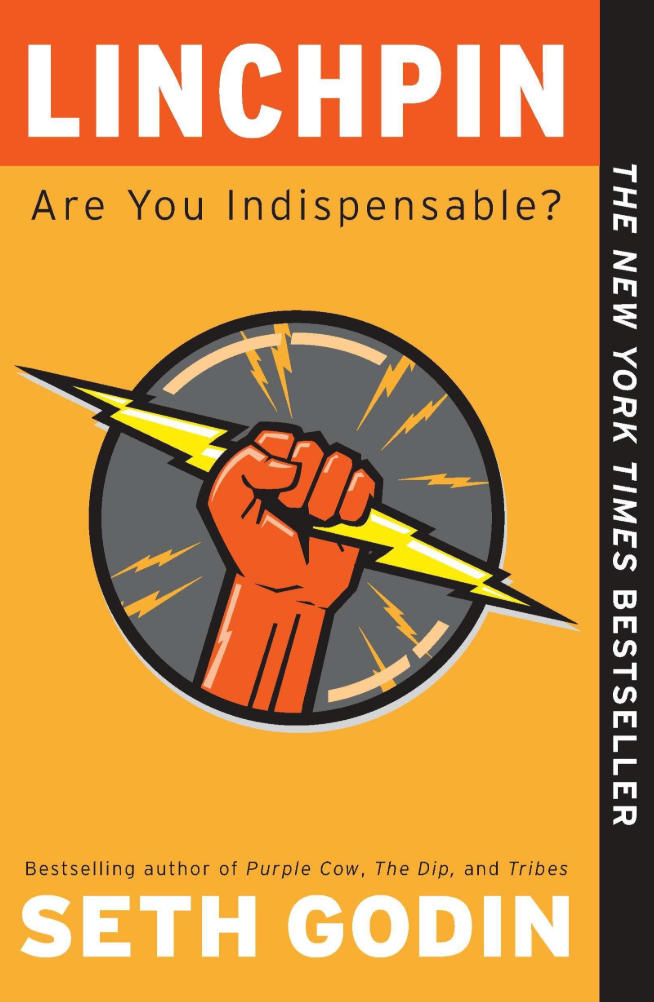
Linchpin focuses on being indispensable. Whether you are in an organization or a tribe, your contribution should be significant insomuch as being irreplaceable. With the advent of more advanced technology, this couldn't be more relevant today. As technology advances, more menial tasks that are usually done by manual human labor are now being replaced by machines.
A machine can do rote and mundane tasks, but only a person can have the insight and creativity. That is why in this book, Godin encourages us to be artists.
I read this book after reading Steven Pressfield's "War of Art". It felt as if somehow Linchpin echoed and even expanded on the ideas on War of Art. Whereas War of Art was more of a manifesto, Linchpin like and essay expansion on being true artists. It magnifies the idea on overcoming resistance and listening to your muse in order to create.
To be an artist means that you create. Instead of simply following the rules, you must create them. That's what distinguishes replaceable members of a tribe to a linchpin. Godin expands on this idea so much that it had my head spinning. That's the only thing that I didn't like from this book; his goes on so much on expanding his ideas that it loses its focus on the main premise.
What I liked about this book is that I became inspired to contribute more in my job without feeling like I'm pressured. I genuinely enjoy my job now compared to when I was thinking only on fulfilling my job description.
Ultimately, this book shows us that those who had the most impact in their respective fields were not only doing things from a sense of obligation, but instead they followed that passion and creativity within them to serve.